

New & notable projects
Selected clinical trials
In 2025, the Kaiser Permanente Southern California clinical trials program supported 430 protocols across 39 therapeutic areas.
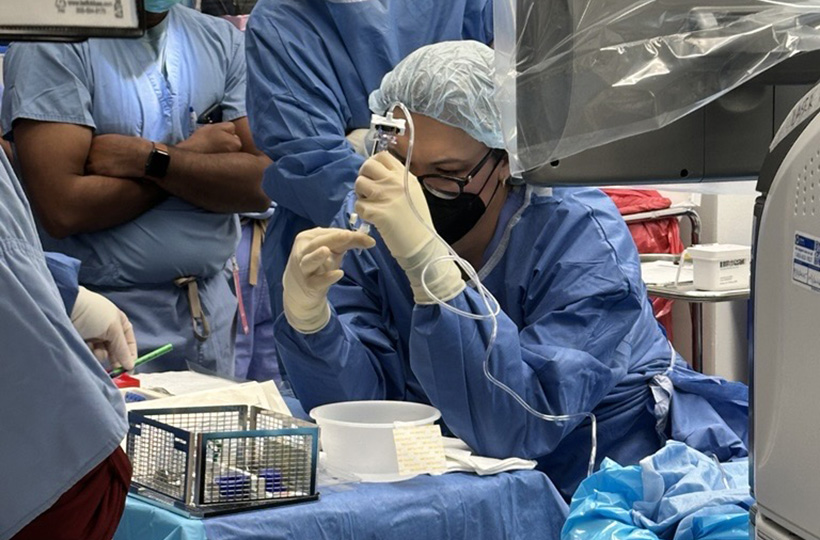
Kaiser Permanente Southern California’s clinical trials program supports hundreds of active studies each year and offers members opportunities to participate in research that may shape future standards of care. The selected trials on this page highlight work that spans new medicines, devices, and prevention strategies across diverse medical specialties.
Highlighted cancer studies include trials that add targeted therapy to lung cancer immunotherapy, use post-surgery blood tests to guide colon cancer chemotherapy, and test de-escalated regimens that preserve outcomes. Other studies reduce breast cancer long-term effects and compare new hormone options for advanced prostate cancer.
Our general medicine portfolio spans multiple therapeutic areas. Among the trials highlighted below are studies that evaluate new devices and therapies for heart disease, stroke, kidney disease, macular degeneration and high-risk pregnancy. Prevention trials test longer-acting human immunodeficiency virus prevention and immune-based acne strategies.
Together, these studies illustrate how our program supports both scientific progress and meaningful participation opportunities for members, while generating evidence that clinicians can translate into everyday practice.
Cancer
Early-stage triple-negative breast cancer
Study title: SWOG S2212 (SCARLET) Shorter Anthracycline-Free Chemo Immunotherapy Adapted to Pathological Response in Early Triple Negative Breast Cancer (SCARLET), a randomized phase III study
Summary: Triple-negative breast cancer is a fast-growing type of breast cancer. It is often treated with chemotherapy before surgery, sometimes in combination with immunotherapy. Anthracyclines can improve outcomes for some patients. But anthracyclines can also cause side effects that may last for years, such as heart problems. This has led to interest in anthracycline-free regimens that may be easier to tolerate. This study is important because it assesses whether treatment can be safely de-escalated without sacrificing cancer outcomes.
Principal investigator: Sujatha Murali, MD, MS
Locations: Anaheim, Baldwin Park, Bellflower, Fontana, Irvine, Los Angeles, Ontario, Panorama City, Riverside, San Marcos, South Bay, West Los Angeles, Woodland Hills, and Zion.
For more info, see ClinicalTrials.gov: https://clinicaltrials.gov/study/NCT05929768
Premenopausal ER+/HER2- early breast cancer with low recurrence score
Study title: NRG-BR009 (OFSET) A Phase III adjuvant trial evaluating the addition of adjuvant chemotherapy to ovarian function suppression plus endocrine therapy in premenopausal patients with pN0–1, ER-positive/HER2-negative breast cancer and an Oncotype recurrence score ≤ 25 (OFSET)
Summary: For patients who have not gone through menopause and have early-stage breast cancer that is estrogen receptor-positive (ER+) and HER2-negtative, lowering or stopping ovarian hormone production along with hormone (endocrine) therapy can be highly effective. If a patient’s 21-gene test shows a low recurrence score, it is not clear how much extra help chemotherapy adds on top of hormone-based treatment. This study is important because it aims to answer whether chemotherapy meaningfully improves outcomes in this specific lower-genomic-risk group.
Principal investigator: Sujatha Murali, MD, MS
Locations: Anaheim, Baldwin Park, Bellflower, Fontana, Irvine, Los Angeles, Ontario, Panorama City, Riverside, San Marcos, South Bay, West Los Angeles, Woodland Hills, and Zion.
For more info, see ClinicalTrials.gov: https://clinicaltrials.gov/study/NCT05879926
Biomarker low-risk node-positive and T3N0 breast cancer
Study title: CCTG MA.39 (TAILOR RT) – A randomized trial of regional radiotherapy in biomarker low-risk node-positive and T3N0 breast cancer
Summary: After breast cancer surgery, radiation may be used to lower the chance that cancer comes back. Regional nodal irradiation, or RNI, involves giving radiation to nearby lymph node areas as well as to the breast or chest wall. RNI can lower the risk of cancer returning in lymph nodes. But for patients with lower risk factors, it is not clear how much extra benefit RNI adds. This study evaluates whether RNI is helpful for women whose cancer has lower-risk features and who have a larger tumor with no lymph nodes or only a small number involved. Results of this study may help physicians tailor radiation treatment after surgery.
Principal investigator: Aakash Batra, MD
Locations: Anaheim, Bellflower, Los Angeles, and Ontario
For more info, see ClinicalTrials.gov: https://clinicaltrials.gov/study/NCT03488693
Advanced ovarian cancer maintenance therapy
Study title: Testing olaparib for one or two years, with or without bevacizumab, to treat ovarian cancer
Summary: Ovarian cancer is often diagnosed at an advanced stage, and even after a good initial response, many patients face a risk of recurrence. Maintenance therapy with poly (ADP-ribose) polymerase (PARP) inhibitors such as olaparib can improve outcomes for people with breast cancer gene 1/2 (BRCA1/2) mutations or homologous recombination deficiency, but the best duration of treatment is still uncertain. This pragmatic study is conducted in real-world clinical practice with streamlined data collection. It could clarify whether a shorter course can preserve benefit while reducing toxicity and treatment burden.
Principal investigator: Devansu Tewari, MD, MBA
Therapeutic area: Gynecologic Oncology
Locations: Bellflower, Irvine, Los Angeles, Panorama City, Riverside, San Diego, San Marcos, South Bay, West Los Angeles, and Woodland Hills
For more info, see ClinicalTrials.gov: https://clinicaltrials.gov/study/NCT06580314
Resected or unresectable KRAS G12C-mutant lung cancer
Study title: A phase 3, multicenter, double-blind, placebo-controlled study assessing the efficacy and safety of olomorasib in combination with standard-of-care immunotherapy in participants with resected or unresectable KRAS G12C-mutant non-small cell lung cancer (SUNRAY-02)
Summary: Some people with non-small cell lung cancer have a change in the cancer called a KRAS G12C mutation. There is a need for better treatments for people whose cancer has been removed with surgery as well as for people whose cancer cannot be removed with surgery. This study looks at whether adding olomorasib, a medicine that targets KRAS, to standard immunotherapy can help control cancer better in these high-risk groups. Positive results could establish the first KRAS-targeted standard of care in early stage non-small cell lung cancer.
Principal investigator: Eric C. McGary, MD, PhD, MPH
Therapeutic area: Hematology Oncology
Locations: Irvine, Los Angeles, Panorama City, San Marcos, San Diego, Bellflower, South Bay, West Los Angeles, Riverside, Fontana, Ontario, Anaheim, Baldwin Park, and Woodland Hills
For more info, see ClinicalTrials.gov: https://clinicaltrials.gov/study/NCT06890598
Metastatic non-small cell lung cancer with STK11/KEAP1/KRAS alterations
Study title: AstraZeneca D419ML00003 (TRITON) – a phase IIIB, randomized, multicenter, open-label study to assess the efficacy of durvalumab plus tremelimumab versus pembrolizumab, in combination with platinum-based chemotherapy, for first-line treatment of metastatic non-small cell lung cancer with non-squamous histology and STK11, KEAP1, and/or KRAS alterations
Summary: Metastatic non-small cell lung cancer remains difficult to treat, particularly when the cancer has certain gene changes, such as STK11, KEAP1, and/or KRAS. Because these biologic subgroups may respond differently to standard immunotherapy, additional first-line strategies are being evaluated. This study is important because positive results could establish a new approach for a molecularly defined subgroup with historically limited benefit from current regimens.
Principal investigator: Eric C. McGary, MD, PhD, MPH
Therapeutic area: Hematology Oncology
Locations: West Los Angeles
For more info, see ClinicalTrials.gov: https://clinicaltrials.gov/study/NCT06008093
Newly diagnosed, high-risk leukemia/lymphoma
Study title: Testing early treatment for patients with high-risk chronic lymphocytic leukemia (CLL) or small lymphocytic leukemia (SLL), EVOLVE CLL/SLL study
Summary: Chronic lymphocytic leukemia (CLL) and small lymphocytic lymphoma (SLL) are often monitored without immediate treatment when symptoms are absent. For patients with high-risk disease features, it is not yet clear whether starting therapy earlier—before symptoms develop—can improve long-term outcomes. This study is important because it addresses a key practice question: whether early intervention improves survival and quality of life compared with waiting to treat.
Principal investigator: Ashraf Aziz, MD
Therapeutic area: Hematology Oncology
Locations: Anaheim, Baldwin Park, Bellflower, Fontana, Irvine, Los Angeles, Ontario, Panorama City, Riverside, San Diego, San Marcos, South Bay, West Los Angeles, and Woodland Hills
For more info, see ClinicalTrials.gov: https://clinicaltrials.gov/study/NCT04269902
Metastatic castration-resistant prostate cancer after next-gen hormonal therapy
Study titles:
Study of opevesostat (MK-5684) versus alternative NHA in mCRPC (MK-5684-003) (OMAHA-003)
A study of opevesostat (MK-5684) versus alternative next-generation hormonal agent (NHA) in metastatic castration-resistant prostate cancer (mCRPC) post one NHA (MK-5684-004) (OMAHA-004)
Summary: Metastatic castration-resistant prostate cancer (mCRPC) can progress even after treatment with next-generation hormonal agents and taxane-based chemotherapy. When this happens after one of these treatments, patients often need other options that slow the cancer with side effects that are manageable. These 2 trials compare opevesostat with an alternative therapy in people with mCRPC. OMAHA-003 seeks to recruit men whose cancer has progressed after treatment with 1 next-generation agent and 1 or 2 taxane-based chemotherapies, while OMAHA-004 aims to recruit participants whose cancer has progressed after treatment with 1 next-generation agent but not taxane-based chemotherapy. Kaiser Permanente Southern California has been one of the highest accrual sites in the U.S. for OMAHA-004.
Principal investigator: Helen Moon, MD
Locations: Anaheim, Harbor City, Los Angeles, Riverside, and San Diego
For more info, see ClinicalTrials.gov: https://clinicaltrials.gov/study/NCT06136624 or https://clinicaltrials.gov/study/NCT06136650
Patients with 1–2 non-advanced adenomas
Study title: Five or ten year colonoscopy for 1-2 non-advanced adenomatous polyps (FORTE)
Summary: After a colonoscopy that finds and removes non-advanced adenomas, follow-up (surveillance) colonoscopy helps reduce the risk of colorectal cancer. However, the best timing for surveillance is still debated. A longer interval could reduce unnecessary procedures and costs if it is shown to be equally safe. This study is important because its results could directly inform surveillance guidelines for a large number of patients. This NCORP study compares surveillance colonoscopy at 10 years versus surveillance at 5 and 10 years in people with 1–2 non-advanced adenomas. It aims to enroll 9500 participants. The Kaiser Permanente NCORP site continues to be the highest accrual site within NCORP.
Principal investigator: Ahmed Megahed
Locations: Los Angeles
For more info, see ClinicalTrials.gov: https://clinicaltrials.gov/study/NCT05080673
Resected colon cancer after surgery
Study title: NRG GI008 colon adjuvant chemotherapy based on evaluation of residual disease (CIRCULATE-US)
Summary: After surgery for colon cancer, some patients benefit from chemotherapy to lower the risk of recurrence. The challenge is identifying who truly needs additional treatment. Circulating tumor DNA (ctDNA) testing may help detect microscopic residual disease and personalize decisions about adjuvant therapy. This study is important because it could reduce overtreatment in ctDNA-negative patients while helping optimize therapy for those at highest risk. This phase II/III trial uses ctDNA results after surgery to guide whether to recommend chemotherapy and, for patients who are ctDNA-positive, which regimen to use.
Principal investigator: Gary L. Buchschacher Jr., MD, PhD
Locations: Anaheim, Baldwin Park, Bellflower, Fontana, Irvine, Los Angeles, Ontario, Panorama City, Riverside, San Marcos, South Bay, West Los Angeles, Woodland Hills, and Zion
For more info, see ClinicalTrials.gov: https://clinicaltrials.gov/study/NCT05174169
Locally advanced dMMR/MSI-H rectal cancer
Study title: GSK 219369 AZUR-1 – a phase 2, single-arm, open-label study with dostarlimab monotherapy in participants with untreated stage II/III dMMR/MSI-H locally advanced rectal cancer
Summary: Locally advanced rectal cancer is often treated with chemotherapy, radiation, and surgery, which can have lasting effects on bowel function and quality of life. In tumors that are mismatch-repair deficient or microsatellite instability–high (dMMR/MSI-H), immunotherapy may be effective and could allow some patients to avoid or delay more invasive treatment. This study is important because it evaluates whether immunotherapy alone can achieve durable control while allowing non-operative management in selected patients.
Principal investigator: Gary L. Buchschacher Jr., MD, PhD
Locations: Anaheim, Baldwin Park, Bellflower, Fontana, Irvine, Los Angeles, Ontario, Panorama City, Riverside, San Marcos, South Bay, West Los Angeles, Woodland Hills, and Zion
For more info, see ClinicalTrials.gov: https://clinicaltrials.gov/study/NCT05723562
General Medicine
Severe symptomatic aortic stenosis in low-to-intermediate risk patients
Study title: Evaluation of the Navitor transcatheter heart valve in low and intermediate risk patients who have severe, symptomatic, aortic stenosis requiring aortic valve replacement (ENVISION)
Summary: Severe aortic stenosis can cause shortness of breath, chest pain, and other symptoms that worsen over time, and valve replacement is often required. Transcatheter aortic valve implantation (TAVI) has expanded access to less invasive treatment, and continued evaluation is important as it is used in lower-risk populations. This trial evaluates the safety and effectiveness of the Navitor TAVI system in patients with symptomatic, severe native aortic stenosis who are at low or intermediate risk for surgical mortality. It will also evaluate the safety and effectiveness of the TAVI system in valve-in-valve procedures. This is the first clinical trial for the Fontana Catheterization lab.
Principal investigator: William Mosley, MD; Jeffrey Cavendish, MD
Therapeutic area: Cardiology
Locations: Fontana and San Diego
For more info, see ClinicalTrials.gov: https://clinicaltrials.gov/study/NCT05932615
Transcatheter aortic valve failure
Study title: Redo transcatheter aortic valve replacement for transcatheter aortic valve failure (RESTORE)
Summary: As transcatheter aortic valve implantation (TAVI) is used more widely, some patients experience bioprosthetic valve failure over time. When this happens, redo transcatheter valve replacement may offer a less invasive option than repeat surgery, but additional data are needed to understand outcomes and durability. This study is important because it builds needed evidence on redo-TAVI safety and performance as more patients live long enough to experience valve failure.
Principal investigator: Somjot Brar, MD, MPH
Therapeutic area: Cardiology
Locations: Los Angeles
For more info, see ClinicalTrials.gov: https://clinicaltrials.gov/study/NCT06777368
Moderate-to-severe acne in adults
Study title: A phase I/II, randomized, placebo-controlled, multi-arm, dose-finding study to evaluate the safety, efficacy, and immunogenicity of an acne mRNA vaccine candidate in adults with moderate to severe acne 18 to 45 years of age
Summary: Moderate-to-severe acne can cause painful lesions, scarring, and significant psychosocial burden. Although many therapies exist, some people do not respond well or cannot tolerate available options. This phase I/II trial evaluates the safety and immune response of an investigational mRNA vaccine candidate in adults ages 18–45 with moderate-to-severe acne. It is important because it evaluates a novel mRNA-based approach that could expand future treatment options if it proves safe and immunogenic.
Principal investigator: William Towner, MD, FACP, FIDSA
Therapeutic area: Dermatology
Locations: Los Angeles
For more info, see ClinicalTrials.gov: https://clinicaltrials.gov/study/NCT06316297
Adolescents and adults at risk of HIV acquisition
Study title: A phase 2b single arm, repeat dose study to evaluate the pharmacokinetic profile, safety, and tolerability of a new formulation of cabotegravir LA injected intramuscularly Q4M in adolescent and adult participants at risk of HIV acquisition
Summary: Long-acting injectable pre-exposure prophylaxis (PrEP) has expanded options for human immunodeficiency virus (HIV) prevention, especially for people who may have difficulty taking a daily pill. This phase 2b study evaluates a new formulation of long acting cabotegravir injected every four months in adolescents and adults at risk of HIV acquisition. Understanding whether extended dosing intervals can maintain protective drug levels could further improve access and adherence. The Kaiser Permanente Los Angeles site was one of the highest enrollers in the country.
Principal investigator: William Towner, MD, FACP, FIDSA
Therapeutic area: Infectious Diseases
Locations: Los Angeles
For more info, see ClinicalTrials.gov: https://clinicaltrials.gov/study/NCT06741397
Focal segmental glomerulosclerosis (FSGS)
Study title: A pivotal phase 3, multicenter, randomized, double-blind, placebo-controlled study of the efficacy and safety of DMX-200 in patients with focal segmental glomerulosclerosis (FSGS) who are receiving an angiotensin II receptor blocker (ARB) (ACTION3)
Summary: Focal segmental glomerulosclerosis (FSGS) is a rare kidney disorder that can cause significant protein loss in the urine and can progress to kidney failure. There are no approved medications for FSGS, and there is a need for therapies that can slow disease progression and preserve kidney function. This phase III trial evaluates the investigational medicine DMX-200 in adults with focal segmental glomerulosclerosis (FSGS) who are receiving an angiotensin receptor blocker (ARB). The Kaiser Permanente Los Angeles site is one of the top enrolling sites in the trial.
Principal investigator: John J. Sim, MD
Therapeutic area: Nephrology
Locations: Los Angeles
For more info, see ClinicalTrials.gov: https://clinicaltrials.gov/study/NCT05183646
Immunoglobulin A nephropathy (IgAN)
Study title: ALXN1210-IgAN-320 – a phase 3, randomized, double-blind, placebo-controlled study to evaluate the efficacy and safety of ravulizumab in adult participants with immunoglobulin A nephropathy (IgAN)
Summary: Immunoglobulin A nephropathy (IgAN) is a chronic kidney disease that can lead to progressive loss of kidney function. Even with best supportive care, many patients continue to have significant protein in the urine, which is associated with higher risk of long-term kidney damage. New therapies are being studied to slow progression. This phase III trial evaluates ravulizumab, a complement C5 inhibitor, in adults with immunoglobulin A nephropathy (IgAN). If results are positive, this study could lead to a potential disease-modifying strategy in IgAN.
Principal investigator: Hui Xue, MD, MMSc; John J. Sim, MD
Therapeutic area: Nephrology
Locations: San Diego and Los Angeles
For more info, see ClinicalTrials.gov: https://clinicaltrials.gov/study/NCT06291376
Stroke survivors and cognitive outcomes
Study title: Determinants of incident stroke cognitive outcomes and vascular effects on recovery (DISCOVERY)
Summary: Stroke is a leading cause of disability, and many survivors develop cognitive symptoms that can affect independence and quality of life. Understanding which clinical and imaging factors predict cognitive outcomes may help guide follow-up care and inform future prevention and rehabilitation strategies. This multi-center, observational study is important because it takes a large, longitudinal approach to identifying modifiable factors that contribute to post-stroke cognitive decline. The Kaiser Permanente Los Angeles site is one of the top enrolling sites in the country and has been recognized as the highest enrolling site for Spanish-speaking participants.
Principal investigator: Navdeep Sangha, MD; Pamela Cheng, DO
Therapeutic area: Neurology-Stroke
Locations: Los Angeles
For more info, see ClinicalTrials.gov: https://clinicaltrials.gov/study/NCT04916210
Acute spontaneous intracerebral hemorrhage
Study title: Recombinant factor VIIa (rFVIIa) for acute hemorrhagic stroke administered at earliest time (FASTEST)
Summary: Intracerebral hemorrhage is a life-threatening type of stroke, and early bleeding expansion can worsen outcomes. Treatments that can be given very soon after symptom onset may help limit hematoma growth and improve recovery, but rapid identification and treatment remain challenging. This phase III trial tests whether ultra-early recombinant factor VIIa (rFVIIa), given within two hours of spontaneous intracerebral hemorrhage onset, improves outcomes compared with placebo. This study is important because it evaluates a treatment strategy designed for real-world emergency use, when limiting bleeding is most likely to improve outcomes.
Principal investigator: Navdeep Sangha, MD
Therapeutic area: Neurology-Stroke
Locations: Los Angeles, South Bay, West Los Angeles, Riverside, Fontana, Baldwin Park, and Downey
For more info, see ClinicalTrials.gov: https://clinicaltrials.gov/study/NCT03496883
Geographic atrophy from dry age-related macular degeneration
Study title: A phase 1b, multicenter, dose escalation, evaluation of safety and tolerability of ASP7317 for geographic atrophy secondary to age-related macular degeneration (ASTELLAS ASP7317)
Summary: Geographic atrophy is an advanced form of dry age-related macular degeneration and a leading cause of irreversible vision loss. Because current options are limited, there is strong interest in therapies that may slow progression or preserve retinal function. This study is important because it evaluates an investigational stem cell therapy in a condition where effective treatments remain limited. The study team administered the 17th dose in the world to a research participant at the Kaiser Permanente Riverside Medical Center.
Principal investigator: Vivienne S. Hau, MD, PhD
Therapeutic area: Ophthalmology
Locations: Riverside County
For more info, see ClinicalTrials.gov: https://clinicaltrials.gov/study/NCT03178149
Neovascular (wet) age-related macular degeneration
Study title: A randomized, partially masked, controlled, phase 3 clinical study to evaluate the efficacy and safety of RGX-314 gene therapy in participants with nAMD (ASCENT)
Summary: Neovascular (wet) age-related macular degeneration can cause rapid vision loss and often requires frequent injections to control abnormal blood vessel growth and fluid. Gene therapy approaches are being studied to reduce treatment burden while maintaining vision outcomes. This phase III study compares RGX-314 gene therapy with aflibercept in participants with neovascular (wet) age-related macular degeneration (nAMD). This study is important because a successful one-time therapy could decrease the need for repeated injections over time.
Principal investigator: Vivienne S. Hau, MD, PhD
Therapeutic area: Ophthalmology
Locations: Riverside County
For more info, see ClinicalTrials.gov: https://clinicaltrials.gov/study/NCT05407636
Pregnancies at risk for severe HDFN
Study title: A phase 3 randomized, placebo-controlled, double-blind, multicenter study to evaluate the efficacy and safety of study drug in pregnancies at risk for severe hemolytic disease of the fetus and newborn (HDFN) (Azalea)
Summary: Hemolytic disease of the fetus and newborn (HDFN) is a rare immune condition where maternal antibodies attack fetal red blood cells, leading to severe complications. There are currently no treatments approved for alloimmunized pregnant individuals at high risk for severe HDFN. This phase III trial will evaluate the safety and efficacy of an investigational medication for HDFN. This study is the first of its kind to include pregnant individuals at risk for severe HDFN, a rare and serious condition that can cause life-threatening anemia in the fetus or newborn.
Principal investigator: Richard Benoit, MD
Therapeutic area: Urology/Reproductive/Gynecological Disorders
Locations: Los Angeles
For more info, see ClinicalTrials.gov: https://clinicaltrials.gov/study/NCT05912517