




Clinical trial gives young pitcher a path back to baseball
When Chance Shipley was finishing high school in Southern California, baseball defined his future. A pitcher with a college scholarship, he was training for the transition to collegiate athletics when he became seriously ill during winter break in December 2019.
He was vomiting, exhausted and noticed blood in his urine. At first, he said nothing.
“I didn’t want to scare anyone,” Shipley said.
After several days, he told his mother, who took him to the emergency room. Doctors suspected influenza and treated him with fluids. He was sent home without a clear diagnosis.
About 6 months later, during a routine physical exam required for college baseball, a blood test raised concern. Within minutes, Shipley was sent directly to the hospital. Further evaluation showed impaired kidney function and high levels of protein in his urine. A kidney biopsy confirmed the diagnosis: IgA nephropathy, also known as IgAN.
“I was shocked,” Shipley said. “I was young and active. I didn’t expect to hear something like that.”
IgA nephropathy damages kidneys
IgA nephropathy is the most common type of kidney inflammation known as glomerulonephritis found around the world. It is thought to be the main cause of kidney failure throughout the world in people who do not have diabetes or hypertension.
The disease occurs when abnormal IgA antibodies form immune complexes that deposit in the kidneys, triggering inflammation and progressive damage.
For many years, IgAN was considered by clinicians to be relatively benign. That perception changed as long‑term population studies began to show otherwise.
Research from the United Kingdom and the United States, including studies led by John Sim, MD, a nephrologist at Kaiser Permanente’s Los Angeles Medical Center, demonstrated that IgAN carries a substantial lifetime risk of kidney failure. These findings reshaped how clinicians understand disease severity and highlighted the need for effective treatments.
“For a long time, people believed IgAN was a mild and slowly progressing disease,” Dr. Sim said. “The data showed a different story that many patients progress to kidney failure, and most will over their lifetime.”
No known therapies for awhile
When Shipley was diagnosed in 2019, no therapies had been approved to slow IgAN progression. Standard care focused on blood pressure control and general kidney protection. Steroids were sometimes used, but evidence for long‑term benefit was limited.
Shipley was prescribed steroids. The treatment did not improve his kidney function and caused significant side effects, including weight gain, headaches and fatigue. Eventually, doctors stopped the medication, and prescribed another drug.
At the same time, his physical endurance declined. By his sophomore year of college, Shipley found that he could no longer keep up on the field.
“I would pitch one inning and feel completely worn out,” he said. “It wasn’t enjoyable anymore.”
He made the difficult decision to step away from baseball to focus on his health. His coach kept him on scholarship, but for several years Shipley watched games from the sidelines while managing a chronic illness.
“It was a really hard period,” he said. “You think about dialysis, transplant. You’re in your early 20s and trying to picture the rest of your life.”
Kidney research was advancing
While Shipley was managing his disease, the treatment landscape for IgAN was changing. Advances in kidney research and changes in regulatory guidance made it possible to evaluate new therapies using protein in the urine as a meaningful marker of kidney disease progression.
In 2021, the first medication specifically indicated for IgAN, budesonide delayed release (Tarpeyo), received accelerated approval from the Food and Drug Administration. Additional therapies entered late‑stage clinical trials.
In 2023, Kaiser Permanente Southern California began enrolling patients in a phase 3 clinical trial for an investigational IgAN therapy. Shipley was contacted as a potential participant.
He was uncertain.
“My initial reaction was fear,” Shipley said. “I wondered if that meant my disease was getting worse.”
The study involved monthly injections and extensive monitoring. During the initial phase, participants had a 50% chance of receiving the investigational drug and a 50% chance of receiving a placebo. Shipley took time to review the study materials with his mother before deciding to enroll.
Shipley decided to enroll in clinical trial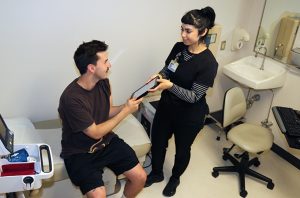
“I had tried everything else,” he said. “If there was a chance it could help me, and also help others in the future, I was willing to try.”
For Anna Rodriguez-Vasquez, MPH, the research project manager overseeing the study, Shipley stood out.
“Most of the patients I work with are much older,” she said. “Chance was in college. He was trying to build his life.”
Working alongside her teammates, Rodriguez‑Vasquez coordinated scheduling, study procedures, and follow‑up visits. As a group, they saw changes beyond clinical data. “He seemed more hopeful,” she said. “More engaged with what was coming next in his life.”
After a few treatments, health improved
From a medical standpoint, Shipley’s lab values improved within months of starting the study. His protein levels decreased substantially, suggesting a slower rate of kidney damage. Although the trial remained blinded, the improvement was encouraging.
“Even without knowing which arm of the study he was on, we saw meaningful changes,” Sim said. “The other wonderful thing was his growing confidence each time we saw him.”
As his kidney markers improved, Shipley began exercising again. His endurance gradually returned. He resumed weight training and running for the first time in years.
“Physically, I started to feel like myself again,” he said.
During the fall of his senior year, Shipley reached out to his former coach to ask if he could try to rejoin the team.
“He told me there was always a spot reserved,” Shipley said.
Through fall practice, Shipley continued to build strength and consistency. By the start of the season, he had earned one of the team’s starting pitching roles. Over the course of his senior year, he not only stayed healthy but became one of the collegiate national leaders in strikeouts.
“Making the team again would have been enough for me,” Shipley said. “Everything after that felt like extra.”
After completing the blinded portion of the study, Shipley entered the open‑label extension, which allows all participants to receive the investigational medication. The therapy received FDA approval last year, adding another treatment option for IgAN.
Shipley is staying fit and pursuing a master’s degree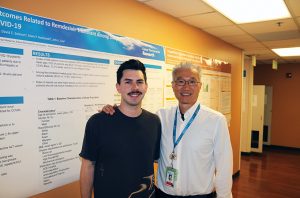
Today, Shipley is 24 and lives in Chino, California. He works full time in human resources while pursuing a master’s degree at Cal State Fullerton. He exercises regularly and continues to manage his kidney disease with ongoing medical care.
“I still have to be careful,” he said. “But my outlook is completely different now.”
Sim says Shipley’s experience reflects broader changes in kidney care.
“We’re seeing real progress in diseases that previously had no targeted treatments,” he said. “That changes the conversation we can have with patients.”
For Rodriguez Vasquez, working closely with patients like Shipley underscores the purpose of clinical research.
“These studies aren’t just about data,” she said. “They’re about people trying to keep moving forward with their lives.”
Shipley agrees.
“I didn’t know what the outcome would be,” he said. “But taking part in the trial gave me a chance to keep going.”
Photos:
1. Chance Shipley pitching in college
2. Chance Shipley and Anna Rodriguez-Vasquez at a regular appointment
3. Chance Shipley and Dr. John Sim